
Motion control technology has been on an evolutionary trajectory, continually pushing the boundaries of what’s possible in various industries. From robotics and manufacturing to entertainment and healthcare, the latest advancements in motion control have been nothing short of revolutionary.
One of the most noteworthy advancements in motion control is its integration with artificial intelligence (AI) and machine learning. These technologies have significantly enhanced the capabilities of motion control systems, allowing for more adaptive, responsive, and intelligent movements. AI-powered motion control systems can learn from their environments, adapt to changes, and optimize movements for improved performance and safety. This fusion of AI and motion control has opened doors to applications that were previously unimaginable.
In the realm of robotics, motion control has led to significant breakthroughs. Robots equipped with advanced motion control systems can perform intricate tasks with exceptional accuracy. These robots are increasingly being employed in industries such as manufacturing, healthcare, and logistics, where precision and dexterity are paramount. Whether it’s assembling delicate components or performing minimally invasive surgeries, these robots are transforming industries and enhancing productivity.
The latest advancements in motion control, fueled by AI, miniaturization, and interdisciplinary collaboration, have unleashed a wave of innovation across industries. These advancements are not only enhancing efficiency and precision but also pushing the boundaries of what’s achievable. The potential applications of motion control technology are vast, and its continued evolution promises a future where precise and adaptive movements redefine our world.
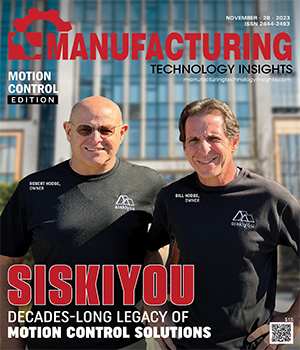
In this edition, we have featured Siskiyou. The firm’s success is rooted in its deep understanding of the hurdles encountered by electrophysiology research scientists. The interference caused by electronic noise, a persistent challenge in experiments, is effectively countered by the firm’s choice of DC servo technology, which uses DC motors and control systems to achieve precise and controlled movement.